
Older homes can offer character, established neighborhoods, and architectural details that are difficult to reproduce in newer construction. But behind the walls and beneath the floors, the plumbing system may tell a different story.
Pipes, drains, sewer lines, water heaters, fixtures, and shutoff valves all have finite service lives. Previous repairs and renovations can also leave a home with a mixture of materials and plumbing components installed at different times.
That doesn’t mean an older home automatically has plumbing problems. It does mean buyers and homeowners should understand what they’re working with.
At J.L. Wagner Plumbing & Piping Inc., we believe identifying potential concerns early gives homeowners more information for maintaining, repairing, and upgrading their plumbing systems.
Here are seven areas worth evaluating in an older home.
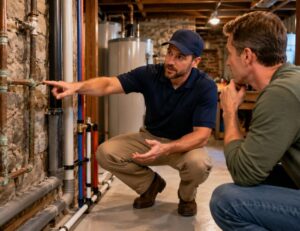
1. Find Out What Type of Piping the Home Has
Start with the pipes supplying water throughout the house.
Different piping materials have different characteristics, and even durable materials eventually age.
If the house has copper plumbing, our guide to how long copper plumbing lasts provides additional information about lifespan and maintenance considerations.
Look beyond the visible piping, too.
Previous renovations may mean that different areas of the house were updated at different times. A kitchen could have newer plumbing while bathrooms or other sections still rely on older piping.
If widespread deterioration or outdated piping becomes a concern, professional piping and repiping services can help address the system more comprehensively.
2. Pay Attention to Signs of Hidden Leaks
Not every plumbing leak produces an obvious puddle.
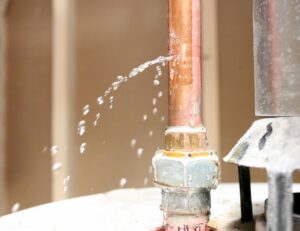
Some develop behind walls, beneath flooring, around fixtures, or underground.
Watch for unexplained moisture, discoloration, musty areas, damaged finishes, or other unusual changes around plumbing fixtures and water lines.
An unexpected increase in water consumption can also deserve attention. Our guide to plumbing problems that may cause a higher water bill explains several possibilities homeowners may want to investigate.
Professional leak detection and repair can help locate plumbing leaks that aren’t immediately obvious.
3. Evaluate the Sewer and Drain System
A home’s plumbing doesn’t stop at the faucets.
Wastewater also needs a reliable path out of the property.
Recurring slow drains, backups, unusual drain behavior, or repeated clogging can indicate that something more significant deserves investigation.
If problems keep returning after basic drain clearing, read about why drains repeatedly clog.
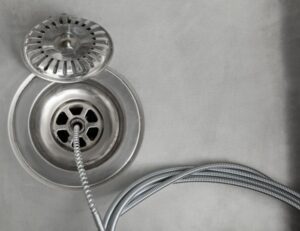
Professional drain cleaning and rodding can address many drainage problems, while a drain video inspection can provide a closer look inside portions of the system.
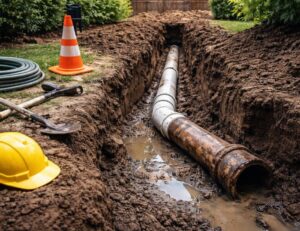
Don’t Overlook the Sewer Line
The sewer line can be particularly important when evaluating an older property.
Homeowners experiencing recurring sewer-related problems can review the warning signs that a sewer line may need replacement and learn more about professional residential sewer services.
4. Check the Water Heater
The water heater is another major plumbing component worth evaluating.
Find out approximately how old it is and pay attention to how consistently it delivers hot water.
Leaks, unusual performance, or other changes may indicate that professional attention is needed.
Our guide to signs a water heater needs repair covers several issues homeowners should recognize.
J.L. Wagner Plumbing & Piping Inc. also provides professional water heater services for residential systems.
5. Locate and Test Your Main Water Shutoff
Every homeowner should know how to shut off the home’s water supply.
That becomes especially important in an older property where an unexpected plumbing failure could occur.
Locate the main shutoff before an emergency forces you to search for it under pressure.
Our guide to finding and using your home’s main water shutoff valve explains why this simple piece of plumbing knowledge matters.
Also identify accessible shutoffs serving individual fixtures where applicable.
Knowing where these valves are can make it easier to respond when a leak or fixture problem develops.
6. Inspect Faucets, Toilets, and Other Fixtures
Plumbing fixtures provide visible clues about the condition and history of the system.
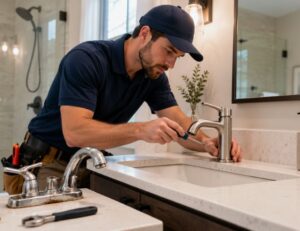
Look for dripping faucets, toilets that run or behave inconsistently, corrosion, loose components, and evidence of previous repairs.
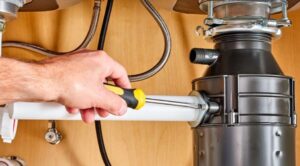
Some issues may only require straightforward plumbing fixture repairs.
Others may make replacement more practical.
If you’re deciding between the two, our repair-or-replace guide for plumbing fixtures can help you think through that decision.
7. Look at the Plumbing as One Complete System
It’s easy to evaluate an older home one faucet at a time.
A better approach is to consider how all of its plumbing components work together.
A home may have updated fixtures but aging supply pipes. It could have a newer water heater but recurring drain issues. One bathroom may have been remodeled while other areas still contain older plumbing.
That’s why the overall condition and history of the system matter.
J.L. Wagner Plumbing & Piping Inc. provides a wide range of residential plumbing services for homeowners dealing with repairs, maintenance, replacements, and plumbing improvements.
Older Plumbing Doesn’t Automatically Mean Bad Plumbing
Age alone doesn’t tell you everything about a plumbing system.
Maintenance history, materials, previous renovations, installation quality, and current condition all matter.
The goal isn’t to assume every older pipe or fixture needs replacement. It’s to understand the system well enough to recognize where professional attention may be worthwhile.
If you’ve purchased an older home or are concerned about aging plumbing, contact J.L. Wagner Plumbing & Piping Inc. to discuss your plumbing needs.
Key Takeaways
Older homes may contain plumbing materials and components installed during several different periods.
Evaluate supply piping as well as drains and sewer lines.
Watch for subtle signs of hidden leaks rather than waiting for obvious water damage.
Determine the condition of the water heater and major plumbing fixtures.
Know where the main water shutoff valve is located before an emergency occurs.
Recurring drain or sewer problems may justify a closer professional evaluation.
Consider the plumbing system as a whole instead of evaluating each fixture independently.