A garbage disposal is one of those kitchen upgrades you don’t think about until it stops working. Then dinner cleanup turns into a messy, slow chore, and the question becomes simple: what’s the real price to get a new unit installed, correctly, without leaks or electrical surprises?
In this guide, you’ll get a clear look at garbage disposal installation cost in 2026, what drives the price up or down, and how to tell when you’re looking at a straightforward swap versus a bigger plumbing job.
Average garbage disposal installation cost in 2026
In early 2026, many homeowners land in a $400 to $600 total range for a standard installation when you combine the unit and professional labor. That’s a practical “most homes” estimate, not a best-case DIY number and not a high-end remodel scenario.
For broader national pricing context, This Old House reports that homeowners commonly pay around the mid-range for installs, with a wide spread depending on model and labor conditions (see their overview of garbage disposal installation cost).
What about St. Charles, IL and the Fox Valley?
Local labor rates and older housing stock can nudge costs higher. For St. Charles, IL, ZIP-based estimates often come in near the upper end of the national range, roughly $488 to $571 for a typical install, before unusual repairs or upgrades. You can compare assumptions and local adjustments using a ZIP-sensitive calculator like Homewyse’s cost to install a garbage disposal.
What you’re actually paying for (unit, labor, and the “small stuff”)
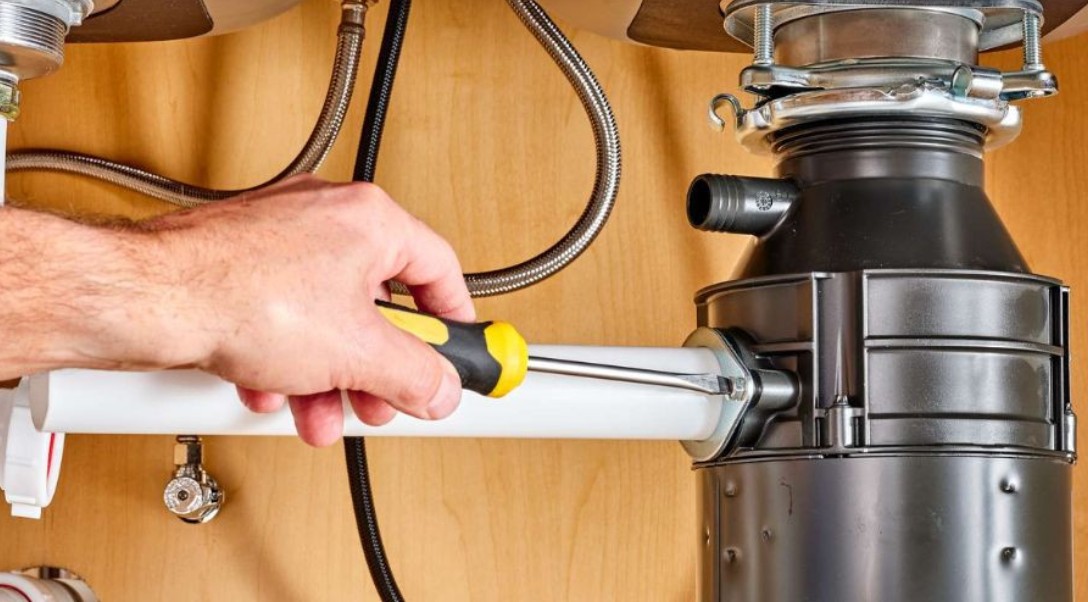
A disposal install is like mounting a ceiling fan. The fan isn’t the whole bill, the safe wiring and secure mounting matter just as much. Most quotes include three buckets of cost:
1) The disposal unit itself
Prices vary a lot by motor size, build quality, and feed type.
- Continuous-feed (most common): Often $75 to $500 for the unit.
- Batch-feed: Often $200 to $650 for the unit.
Quiet models and stronger motors cost more, but they can also reduce jams and noise.
2) Labor and setup time
Many installs take 1 to 2 hours when everything lines up (existing disposal, correct outlet, normal drain setup). Labor rates commonly fall around $50 to $100 per hour, but local rates can vary.
3) Parts and adjustments
This is where “small” extras change the total:
- New mounting ring or gasket
- Drain fittings
- Dishwasher inlet connection work (if applicable)
- Minor drain alignment fixes
- Disposal removal and cleanup
Even when parts are inexpensive, time adds up if the existing plumbing is tight, corroded, or misaligned.
Typical cost ranges at a glance
| Scenario | What’s happening | Common total range |
|---|---|---|
| Like-for-like replacement | Old disposal out, new one in, same connections | $350 to $650 |
| First-time disposal install | New disposal added where none existed | $500 to $950 |
| Higher-end or complicated install | Premium unit plus electrical or drain changes | $625 to $1,000+ |
Ranges vary by home, but the pattern holds: replacement is usually cheaper than first-time installation.
Replacement vs new installation: why the price can change fast
Two homes can have the same sink and very different quotes. The difference is usually the “infrastructure” under the sink.
Straight replacement (most budget-friendly)
If you already have a disposal, a grounded outlet, and a normal sink drain layout, this is typically the simplest job. Many homeowners see totals that match common replacement ranges reported by consumer cost roundups like ConsumerAffairs’ garbage disposal replacement cost guide.
First-time install (costs more because it’s more work)
Adding a disposal where one never existed can require:
- A proper power source (often the big swing factor)
- A compatible drain configuration
- Dishwasher drain tie-in changes (if you have a dishwasher)
If any of those pieces are missing, your installer isn’t just swapping an appliance, they’re building the setup.
The biggest factors that raise or lower your quote
If you’re comparing estimates, these are the items that usually explain why one is higher.
Motor size and build quality
A small motor can work fine for light use, but households that cook often tend to be happier with mid-range power and better grinding components. Paying more for a quieter, stronger unit can prevent clogs and early replacement.
Continuous-feed vs batch-feed
Batch-feed models can cost more, and they install a bit differently. Some homeowners like them because they only run when the cover is in place.
Electrical needs
If the disposal can’t be plugged into a proper outlet under the sink, you may need electrical work. That’s not a “small add-on.” It’s a separate scope, and it’s a common reason first-time installs cost more.
Plumbing condition under the sink
Older metal drains, previous leaks, or a sink that has shifted slightly can turn a simple install into a repair job. Corroded fittings, worn gaskets, and off-angle trap arms can add time.
Sink type and space constraints
Deep farmhouse sinks, tight cabinet layouts, and crowded filtration systems can make access harder. Harder access usually means more labor.
Permits and disposal fees (sometimes)
Some areas or special situations require permits, and some installers include haul-away fees. It’s not always a big number, but it’s worth asking about so the final invoice matches the quote.
DIY vs hiring a plumber: where people get burned
A garbage disposal looks simple until you’re face-to-face with dripping slip nuts and a humming motor that won’t spin. DIY can work for experienced homeowners, but the risk isn’t just “it leaks.”
Common problems that raise the final cost after a DIY attempt:
- Cross-threaded drain connections that won’t seal
- Loose mounting assemblies that drip slowly into the cabinet base
- Incorrect dishwasher drain routing
- Unsafe electrical connections or missing grounding
If your install needs drain changes, electrical updates, or you’ve had repeated clogs, hiring a pro often costs less than fixing a chain reaction of issues.
How to keep installation costs reasonable (without buying a disposal you’ll hate)
You don’t need the most expensive model, but you do need a unit that fits your household.
A few practical ways to control the garbage disposal installation cost:
- Match the unit to your use. A busy kitchen usually benefits from a better mid-range model.
- Replace worn drain parts during the install. It’s cheaper than calling back for a leak.
- Avoid “mystery noise” units. A very loud disposal can signal thinner build quality.
- Ask what the quote includes. Removal, new mounting hardware, and minor drain tweaks should be clear upfront.
When it makes sense to replace instead of repair
A disposal isn’t meant to last forever. Replacement often makes more sense when:
- It leaks from the body of the unit
- It jams often, even after clearing and resetting
- It trips the reset button repeatedly
- It’s loud, rattly, or slow to grind even with light loads
If it’s an older unit and you’re already paying for labor, putting that money toward a new disposal is often the smarter move.
Conclusion
A realistic 2026 garbage disposal installation cost is usually $400 to $600, with St. Charles and Fox Valley homes often landing toward the higher end when labor rates and older plumbing come into play. The fastest way to avoid surprises is to confirm whether you’re doing a simple replacement or adding a disposal for the first time.
If you want a clean install, solid connections, and a disposal that runs smoothly, work with a plumber who does this every day. Serving the Fox Valley since 1917, J.L. Wagner Plumbing & Piping Inc. brings four generations of know-how to homes in St. Charles, IL and nearby communities, and backs the work so you can trust it under the sink, not just on the surface.